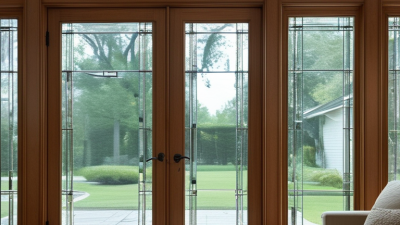
Choosing the best China doors and windows for global buyers requires more than comparing prices. Product performance depends on climate, building design, installation quality, and supplier reliability. A coastal project may need corrosion-resistant aluminum, while a cold region may require low-E glass, thermal breaks, and tight weather seals. Sound familiar?
Experienced buyers often begin with verified specifications rather than attractive photographs. They review frame materials, glass thickness, U-values, air leakage ratings, hardware brands, drainage design, and available test reports. Factory audits also matter. A reliable manufacturer should explain production capacity, quality inspections, packaging methods, and replacement procedures clearly. Samples can reveal details that catalogs hide, such as uneven corners, weak locks, or poor surface finishing.
There is no single “best” option for every market. That assumption deserves reflection. A premium system may fail when installed incorrectly, while a simpler design can perform well with accurate measurements and professional fitting. Buyers should confirm opening sizes, local weather conditions, safety expectations, maintenance needs, and project timelines before placing an order.
The strongest China doors and windows suppliers combine engineering experience with consistent communication. They provide clear drawings, realistic lead times, and traceable quality documents. Independent certification is useful, but it should match the product actually delivered. Visiting a factory or conducting third-party inspection can reduce uncertainty. Small details matter.
This guide examines practical product choices, supplier evaluation methods, customization risks, and installation considerations for international projects. It also recognizes an uncomfortable truth: low purchase prices can create higher costs later. Reliable decisions require evidence, careful questions, and a willingness to challenge convenient promises.
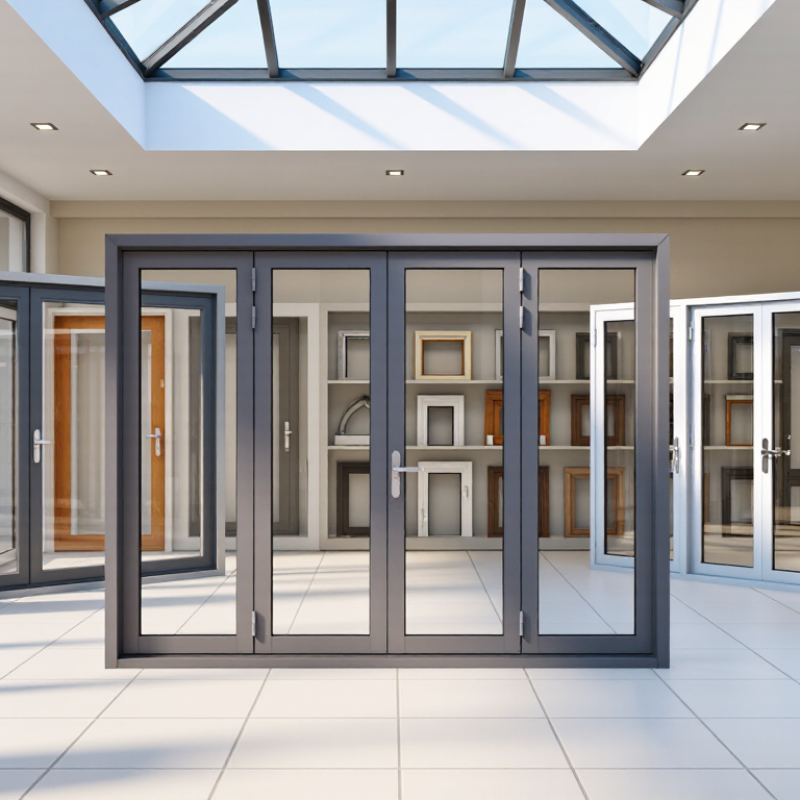
For global buyers, the best China doors and windows are not simply the cheapest products. “Best” should be measured against U-value, air leakage, durability, and total cost. A lower U-value usually means better insulation and less heat transfer. However, figures must match the complete window or door, not only the glass. Request certified test data and check the testing method.
Air leakage matters in windy or air-conditioned buildings. A tight frame can reduce drafts, dust, and energy waste. During supplier evaluation, ask for leakage results at a stated pressure difference. Installation also matters. Even a well-tested window may perform poorly if the opening is uneven or the seals are compressed incorrectly. I have seen specifications look excellent on paper, while careless fitting weakened the result.
Durability depends on coating quality, hardware, drainage, sealants, and repeated operation. Ask for corrosion testing, cycle testing, and replacement-part availability. A coastal project needs different protection from a dry inland warehouse. Cost should include packaging, shipping, duties, installation, maintenance, and possible repairs. The lowest quotation may become expensive after two winters. Still, higher prices do not guarantee better performance. Some product choices are excessive for mild climates. A practical comparison uses the same size, glass formula, performance class, and delivery terms. Small samples help, but they cannot fully predict long-term site behavior. That limitation deserves honest attention.
For global buyers, thermal U-values matter more than frame appearance. Lower U-values mean better insulation. Yet a frame value alone can mislead. EN ISO 10077-2 calculations commonly place uninsulated aluminum frames near 5.7 W/m²K. Thermally broken aluminum often reaches 1.5–2.5 W/m²K. uPVC frames usually fall around 1.1–1.5 W/m²K, while engineered timber often measures 1.0–1.8 W/m²K. These ranges reflect technical guidance from ift Rosenheim and European calculation methods.
The complete window value, Uw, is the practical comparison. It includes the glass, spacer, frame, and window size. The Passive House Institute’s certified component data frequently shows high-performance windows near 0.70–0.85 W/m²K. This normally requires insulated frames, low-emissivity double or triple glazing, warm-edge spacers, and careful sealing. A narrow aluminum frame may look efficient, but poor edge detailing can weaken the result. Small details matter.
In my procurement experience, buyers sometimes compare a frame’s Uf with another product’s whole-window Uw. That is not an equal comparison. The mistake is easy to repeat. Ask for independently verified Uw values under EN 14351-1 or NFRC procedures, using the same dimensions and glass specification. Timber can offer excellent insulation, but moisture control needs attention. uPVC performs consistently, although thermal movement and reinforcement can affect results. Aluminum provides strength and slim sightlines, but thermal breaks must be clearly specified. Climate, installation quality, and maintenance may matter as much as the advertised number.
For global buyers, U-value and SHGC reveal more than glass thickness. U-value measures heat transfer; lower values indicate better insulation. SHGC measures solar heat entering through the window; lower values reduce unwanted summer heat. They must be read together.
Industry data gives useful benchmarks.
The U.S. Department of Energy reports that low-emissivity glazing can reduce window heat loss by about 30–50% compared with standard clear glazing. In typical certified tests, double glazing often reaches a whole-window U-value near 1.1–1.6 W/m²K. High-performance triple glazing may approach 0.6–0.9 W/m²K. These figures vary with frames, spacers, gas fills, and installation quality. SHGC may range from roughly 0.25 to 0.60, depending on coatings and glass selection.
Climate changes the decision.
In cold regions, buyers may prefer lower U-values and moderate SHGC to retain indoor warmth. In hot climates, a lower SHGC can reduce cooling demand near large south- or west-facing openings.
The International Energy Agency identifies buildings as responsible for around 30% of global final energy use, making envelope performance commercially important.
A common mistake is comparing center-of-glass data with whole-window data.
The numbers look better than reality. Ask for certified reports based on recognized testing standards, including frame and hardware results. Also check air leakage, visible transmittance, condensation resistance, and installation details. Triple glazing is not automatically superior; its extra weight can stress hinges, frames, and fixing points.
What Are the Best China Doors and Windows for Global Buyers?
Verify EN 12207 Class 4 Air-Tightness and EN 12210 Wind Ratings
The best doors and windows are not chosen by appearance alone. Their tested performance must match the building’s climate, height, and exposure. EN 12207 Class 4 indicates the highest air-permeability level within this classification system. It can reduce unwanted drafts, dust entry, and energy loss when installed correctly. Ask for the complete test report, not only a sales statement. Ask for evidence.
Check whether the report covers the exact window type, opening size, glass arrangement, and hardware configuration. A small laboratory sample may perform differently from a large sliding door. In project reviews, I compare the tested dimensions with the proposed order. Size changes everything. Also confirm the testing laboratory, test date, product identification, and pressure levels used.
EN 12210 evaluates resistance to wind load, but one number does not tell the entire story. Buyers should review the declared wind class and deflection class for each product. Taller buildings, coastal sites, and exposed corners usually require stricter engineering. Request structural calculations for the actual opening dimensions. Installation matters too. Poor anchors, uneven substrates, or compressed seals can weaken excellent factory results. I have seen specifications fail because installers rushed the final adjustment. That detail is easy to overlook. A reliable supplier should provide drawings, installation guidance, maintenance instructions, and traceable test documentation. Improvements may still be needed after site inspection.
| Verification Dimension | Recommended Requirement | Relevant Standard or Test Basis | What Global Buyers Should Confirm | Typical Use Guidance |
|---|---|---|---|---|
| Air permeability | Class 4 | EN 12207 classification; Class 4 has the lowest air-leakage limit in the standard classification. | Request a laboratory test report for the complete window or door assembly, including frame, sash, seals, hardware, and threshold. | Preferred for energy-efficient residential, commercial, and high-rise applications where drafts and uncontrolled air exchange must be minimized. |
| Class 4 air-leakage limit | Up to 3 m³/(h·m²) at 100 Pa, based on the EN 12207 classification table. | EN 12207 air-permeability classification uses pressure-dependent leakage limits. | Check whether the reported value is given per unit area or per metre of joint length, and confirm the tested product size. | A useful benchmark when comparing products, but not a substitute for project-specific energy or ventilation calculations. |
| Wind resistance classification | EN 12210 Class 4 or Class 5 for demanding projects | EN 12210 classifies resistance to wind load and frame deflection. | Confirm the full designation, such as C4 or C5, because the letter identifies the deflection class and the number identifies the wind-load class. | Class 4 is commonly considered for exposed urban buildings; Class 5 is more suitable for severe exposure, taller buildings, or coastal locations when confirmed by structural design. |
| EN 12210 wind-load test pressure | Class 1: 400 Pa; Class 2: 800 Pa; Class 3: 1,200 Pa; Class 4: 1,600 Pa; Class 5: 2,000 Pa. | EN 12210 classification pressure levels for the main wind-resistance class. | Ensure the report identifies positive and negative pressure testing and states the specimen dimensions. | Do not convert the class directly into a local wind speed; building height, exposure, terrain, design code, and structural calculations are also required. |
| Frame deflection class | Class A, B, or C; Class C permits the lowest relative frontal deflection. | EN 12210 uses A, B, and C to indicate relative frontal deflection limits. | Review the complete designation, for example C4 or C5, rather than relying only on the numerical wind class. | Class C is valuable for large panels, tall openings, narrow mullions, and façades requiring tighter deflection control. |
| Test specimen and dimensions | Tested size should be equal to or representative of the ordered configuration. | EN 12207 and EN 12210 results are dependent on product configuration and specimen dimensions. | Match the report to opening width, height, number of sashes, glazing weight, mullions, transoms, hardware, and threshold type. | Especially important for oversized sliding doors, curtain-wall units, corner windows, and multi-panel systems. |
| Product configuration | The tested configuration must match the final supply configuration. | Performance may change with opening type, seal arrangement, hardware, glazing, frame material, and installation details. | Confirm whether the report covers casement, tilt-and-turn, fixed, lift-and-slide, entrance door, or another product type. | Avoid applying a result from a small fixed window to a large operable door or sliding system. |
| Laboratory documentation | Independent laboratory report with product identification, test date, standards, results, and specimen details. | Test evidence should clearly reference the applicable editions of EN 12207 and EN 12210. | Check traceability, laboratory accreditation, report validity, product drawings, photographs, and any limitations or deviations. | A catalogue claim alone is insufficient for tender, regulatory, insurance, or high-performance building requirements. |
| Installation quality | Use an approved installation method and verify perimeter sealing. | EN 12207 and EN 12210 product tests do not automatically certify the performance of the installed building opening. | Specify compatible air seals, anchoring, drainage, shims, fasteners, expansion gaps, and perimeter interface details. | Critical for maintaining Class 4 air-tightness and the declared wind rating after installation on site. |
What Are the Best China Doors and Windows for Global Buyers?
Matching Chinese door and window systems to local codes is more important than choosing a low quoted price. Start with the project’s climate zone, building height, and exposure. A coastal tower may need corrosion-resistant hardware and stronger wind-load performance. A home in a cold region may require low U-values, warm-edge spacers, and insulated frames. Hot climates often need solar-control glass, shaded openings, and tested air leakage performance.
Local regulations can differ between nearby cities. Check required U-values, solar heat gain coefficients, safety glazing, fire separation, ventilation, and emergency egress dimensions. Ask the supplier for complete test reports, not only product brochures. Confirm whether testing followed standards accepted by the destination market. Structural calculations should use local wind speeds and pressure zones. Water penetration testing also matters, especially for buildings facing driving rain.
Site conditions can expose weak assumptions. A window that performs well in a factory test may fail after poor installation or missing drainage paths. Use approved anchors, compatible sealants, and clear installation tolerances. I have seen projects revise frame details after discovering uneven concrete openings. That was inconvenient, but cheaper than replacing leaking units. One overlooked issue remains common: imported hardware may not match local repair skills. Specify accessible parts, clear warranties, and realistic maintenance procedures before production. Test a full-size sample on site when possible. Small details decide long-term performance.
Match China door and window systems to local codes and climate zones by using the whole-window U-factor as an initial performance benchmark. Lower values indicate better insulation and reduced heat transfer.
Indicative maximum U-factor targets for energy-efficient specification, expressed in W/m²K. Actual requirements vary by country, building type, orientation, glazing area, wind exposure, and local code; confirm the applicable standard before ordering.
Ontario launching new 12-year rebate program