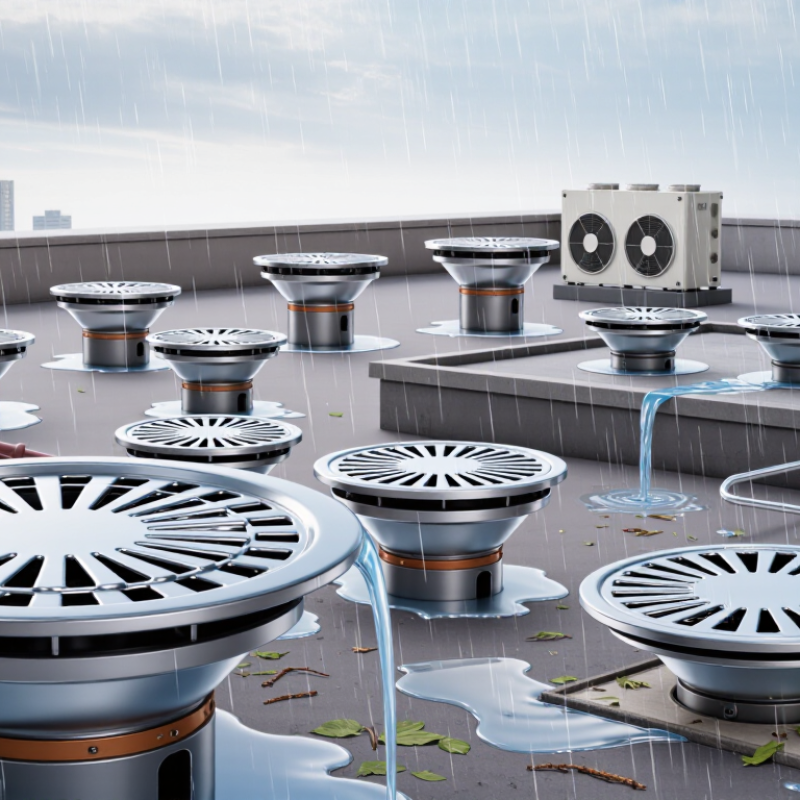
Can China supply the best Roof Drains for global projects? The answer requires more than comparing factory prices. It demands evidence, testing, and field experience. Roof drains must manage intense rainfall, thermal movement, debris, and long-term corrosion. A drain that performs well in a factory photograph may fail on a crowded commercial roof.
The Dodge Data & Analytics World Green Building Trends 2021 report found that 42% of surveyed firms expected most of their projects to achieve green-building status by 2021. This shift increases demand for reliable drainage, recoverable materials, and documented performance. The U.S. Environmental Protection Agency also identifies green infrastructure as a practical tool for controlling stormwater runoff. Roof drainage now supports wider sustainability goals.
Small details matter.
Dr. Joseph Lstiburek, a respected building-science expert, stated, “Water is the most destructive force in a building.” His warning explains why sourcing teams should examine outlet capacity, waterproofing compatibility, grate design, and emergency overflow planning. They should also request material certificates, dimensional inspection records, hydraulic test results, and production traceability.
Chinese manufacturers can offer competitive pricing, stainless-steel options, custom castings, and scalable production. Yet “best” depends on the project. A coastal hotel needs different protection than a warehouse in a dry climate. Buyers should verify compliance with applicable ASME, ASTM, EN, or local requirements. Independent inspections remain valuable, even when a supplier has attractive certifications.
This guide compares China’s Roof Drains suppliers through performance, quality control, customization, lead times, and after-sales support. No shortlist is perfect. Weather data, installation practice, and maintenance planning still deserve closer review.
China has become a leading source of roof drains because its manufacturing base supports flexible, cost-controlled production. The UNIDO International Yearbook of Industrial Statistics 2024 reports that China produced about 31% of global manufacturing value added in 2022. This scale supports stainless steel forming, casting, welding, and precision machining in one supply network. Buyers can request 304 or 316 stainless steel bodies, EPDM seals, removable strainers, and custom outlet sizes. Details matter.
The World Bank Logistics Performance Index 2023 gave China a score of 3.7, ranking it 19th among 139 economies. That logistics capacity helps suppliers coordinate export packing, container loading, and documentation for overseas projects. Experienced buyers should still verify drainage capacity, flange dimensions, coating thickness, and water-test records. Factory audits are useful, but they cannot replace sample testing under realistic rainfall conditions. Not always.
China’s main advantage is not simply lower pricing. It is the ability to adjust drawings, tooling, packaging, and order quantities with relatively short communication cycles. A capable supplier should provide material certificates, inspection photographs, dimensional reports, and installation guidance. However, quality can vary between factories using similar product descriptions. Some suppliers may also present test data without enough project context. That weakness deserves careful review. I would compare at least three samples before approving a large order, especially for roofs exposed to salt air, heavy rainfall, or frequent temperature changes.
Chinese manufacturers commonly supply several roof-drain types for different building conditions. Domed drains help stop leaves and gravel from entering flat-roof outlets. Flat-grate drains suit exposed terraces and service roofs. Siphonic drains move high volumes through reduced pipework, but require precise hydraulic design. Scuppers discharge water through parapets. Emergency overflow drains provide a visible warning when primary outlets fail.
Grand View Research’s 2024 roofing-market analysis projects roughly 4% annual growth through 2030. This expansion increases demand for reliable drainage components, especially on warehouses and commercial roofs. During sourcing, I check flow-rate test data, outlet dimensions, coating thickness, and temperature resistance. Stainless steel, cast iron, aluminum, and polymer options each behave differently. A cheaper drain can become expensive after leaks, blocked grates, or difficult replacement work. I would not treat every factory drawing as final truth. One missed overflow detail may damage an entire roof system.
Tips: Request hydraulic calculations for siphonic systems. Confirm compatibility with the membrane and pipe material. Ask for third-party inspection records, batch traceability, and installation photos. Also verify packaging strength; crushed flanges are a practical problem, not a paperwork issue. EN 1253 and local plumbing codes can guide testing, although project requirements may differ.
China Best Roof Drains for Global Sourcing?
Key materials and performance standards deserve more attention than a low purchase price. Roof drains must handle rainfall, debris, temperature changes, and long-term roof movement. Stainless steel resists corrosion in coastal areas. Cast iron offers strength under heavy maintenance traffic. Aluminum is lighter, but surface protection requires careful checking. Plastic options can reduce weight, yet ultraviolet exposure may weaken some formulations.
Ask for material certificates, dimensional drawings, and production inspection records. Check outlet size, flange design, grate loading, and connection compatibility. Request flow-rate tests under realistic water depths. Applicable standards may include ASME A112.6.4 or EN 1253, depending on the destination market and project type. A test report alone is not enough. Confirm its scope, laboratory competence, and test date. I have seen specifications that looked complete but missed thermal cycling or seal performance. That gap can become expensive after installation.
Tips: Compare flow performance, not only body material. Inspect samples for sharp edges, uneven coatings, and loose grates. Verify packaging protects flanges during sea transport. Ask whether seals remain flexible across the expected temperature range. Leave room for doubt. Supplier claims need independent checks. A small sample inspection may reveal a large production risk.
| Evaluation Dimension | Common Material or Configuration | Typical Technical Data | Performance Advantages | Key Risks to Check | Relevant Standards or Test References |
|---|---|---|---|---|---|
| Drain Body and Outlet | Cast iron, stainless steel, aluminum, or polymeric body with a vertical or horizontal outlet | Common nominal outlet sizes: 75, 100, 150, and 200 mm; outlet configuration should match the drainage system | Correct outlet sizing supports hydraulic capacity and simplifies connection to the building drainage network | Incompatible outlet dimensions, poor dimensional tolerance, insufficient wall thickness, or difficult site installation | EN 1253 series; ASME A112.6.3; local plumbing and building codes |
| Primary Body Material | Coated cast iron | High mass and rigidity; coating systems commonly include epoxy or other corrosion-protection layers | Good mechanical strength, low vibration, and suitability for heavy-duty roofs or trafficable areas when correctly designed | Coating damage can expose the metal to corrosion; casting defects and inadequate coating adhesion require inspection | EN 1253; ISO 12944 for corrosion-protection system classification; project-specific coating specifications |
| Corrosion Resistance | Stainless steel, typically austenitic grades such as 304 or 316L | Nominal chromium content is at least 18% for common 304/316 stainless grades; 316L contains molybdenum for improved chloride resistance | Suitable for humid, coastal, industrial, or chemically aggressive environments when the grade and finish are properly selected | 304 may be unsuitable for high-chloride exposure; dissimilar-metal contact can cause galvanic corrosion | ASTM A240/A240M; EN 10088; ISO 9227 for salt-spray testing where applicable |
| Lightweight Construction | Aluminum body and dome or grate | Low density of approximately 2.7 g/cm³; often supplied with anodized, painted, or powder-coated surfaces | Reduces handling and roof-load requirements; useful for projects prioritizing low installation weight | Lower resistance to impact and abrasion than cast iron; coating and galvanic isolation must be verified | ASTM B209/B209M; EN 573; EN 755; project-specific coating requirements |
| Polymeric Components | PVC, polypropylene, or other engineered polymer components for seals, bodies, or accessories | Low density and high resistance to many water-based chemicals; operating temperature depends on the polymer formulation | Lightweight, corrosion-resistant, and generally easy to cut or install | Thermal movement, ultraviolet exposure, brittleness at low temperature, and compatibility with roofing membranes must be evaluated | ASTM D1784 for PVC compounds; ASTM D4101 for polypropylene; EN 1253 where the complete drain assembly is covered |
| Waterproofing Flange | Clamping flange, wide membrane flange, or bonded flange designed for built-up, modified-bitumen, PVC, TPO, or EPDM systems | Flange width and surface finish should be compatible with the roof membrane and specified installation method | Reduces leakage risk by creating a continuous transition between the roof waterproofing layer and the drain | Membrane incompatibility, inadequate clamping pressure, sharp edges, and insufficient flange width | EN 1253; ASTM C1177/C1177M for glass-mat gypsum substrate where applicable; membrane manufacturer installation requirements |
| Grate or Dome | Removable dome, flat grate, or anti-vortex grate in stainless steel, cast iron, aluminum, or polymer | Free drainage area should be sufficient for the design flow; openings must limit entry of large debris while maintaining cleanability | Protects the outlet from leaves and debris and can reduce vortex formation in certain configurations | Small openings may clog quickly; inadequate fixing may allow displacement under maintenance or wind loads | EN 1253; ASME A112.6.3; project-specific debris and access requirements |
| Hydraulic Capacity | Standard-flow or high-capacity roof drain assembly | Flow rate varies with outlet diameter, head of water, grate geometry, and test method; capacity must be verified at the design head | Correctly rated drains help control ponding and support reliable stormwater discharge | Catalog flow rates may not be directly comparable when test heads or measurement methods differ | EN 1253 hydraulic performance provisions; ASME A112.6.3; local rainfall-intensity and drainage-code calculations |
| Emergency Overflow | Secondary overflow drain, scupper, or raised overflow outlet | Designed independently from the primary drain; elevation is set to limit roof-water depth during primary blockage | Provides a visible warning and protects the roof structure from excessive ponding loads | Overflow level may be too high, discharge may be directed toward façades, or the secondary path may be obstructed | International Plumbing Code provisions; International Building Code provisions; local jurisdiction requirements |
| Load and Impact Resistance | Reinforced grate or heavy-duty drain assembly | Load classification depends on the installed location; pedestrian, maintenance, and trafficable areas require different ratings | Reduces deformation and damage from maintenance equipment, foot traffic, or service vehicles | Unverified load ratings, inadequate substrate support, and mismatch between grate class and installation location | EN 124 for gully and manhole-top load classification where applicable; ASME A112.6.3; project structural requirements |
| Sealing Components | EPDM, NBR, silicone, or other elastomeric gaskets | EPDM generally performs well with weathering and hot water; NBR is often selected for oils; service temperature depends on compound formulation | Reliable seals reduce leakage at joints and membrane interfaces when correctly compressed | Incorrect elastomer selection, compression set, chemical exposure, and aging under ultraviolet radiation | ASTM D2000; ISO 3601 for O-rings where applicable; EN 681-1 for elastomeric seals in drainage applications |
| Thermal Movement | Mechanically joined body with flexible couplings or movement-tolerant connections | Linear thermal expansion differs substantially between metals and polymers; connection design must accommodate expected temperature changes | Helps prevent joint stress, cracking, and membrane separation caused by seasonal temperature variation | Rigid connections between dissimilar materials can transfer excessive stress to the drain or waterproofing layer | EN 1253; ASTM C1173 for elastomeric sealing sleeves where applicable; project movement calculations |
| Fire and Smoke Considerations | Metal drain body with compatible roof insulation and membrane system | Fire performance is determined by the complete roof assembly rather than the drain alone | Metal components generally provide good resistance to heat and flame compared with many unprotected polymers | Drain penetration details may compromise the tested roof assembly if substituted without approval | EN 13501-1; ASTM E108/UL 790 for roof-covering fire testing; local fire-code requirements |
| Quality Control and Traceability | Batch-controlled production with dimensional, material, coating, and leak inspections | Recommended records include material certificates, dimensional inspection reports, coating checks, and hydraulic or leak-test results | Improves consistency across shipments and supports project documentation and warranty claims | Untraceable raw materials, inconsistent drawings, incomplete test reports, and undocumented design changes | ISO 9001 quality-management framework; EN 10204 inspection documents; applicable product-standard test reports |
| Global Sourcing Documentation | Technical data sheet, installation manual, CAD drawings, packing list, and compliance documentation | Documents should state dimensions, materials, coating, flow-test conditions, operating limitations, and installation details | Supports engineering approval, customs classification, site installation, and cross-border quality verification | Marketing-only claims without test conditions or incomplete installation information can create approval delays | Applicable EN, ASTM, ASME, ISO, and destination-market building-code requirements |

China’s roof drain market offers broad choices, but supplier selection requires more than comparing prices. A reliable partner should understand roof structure, drainage capacity, outlet dimensions, and the climate where the product will operate. Request technical drawings, material specifications, flow-rate data, and installation guidance before discussing large orders. Ask for evidence. Product samples should match the approved drawings, including flange thickness, sealing surfaces, strainer fit, and coating quality.
A practical evaluation starts with the factory, not the sales brochure. Check whether production equipment, inspection tools, and trained staff are actually available. Review records for incoming materials, dimensional checks, leak testing, and final packing. If possible, arrange an independent inspection during production. Practical inspections often reveal small details, such as uneven casting edges or weak carton protection, that can create costly job-site problems. They are easy to miss. Confirm batch traceability and ask how rejected units are handled.
Communication also reveals reliability. The supplier should answer clearly about tolerances, custom tooling, lead times, replacement parts, and export documents. Test this with a small trial order before committing to a container. A supplier that admits a limitation may be safer than one promising everything. Still, buyers should verify certificates and test reports with the issuing organization when practical. Clear specifications, realistic schedules, and written quality requirements reduce misunderstandings, although no sourcing process is perfect. Review it carefully.
China Best Roof Drains for Global Sourcing?
Export, Quality Control, and Global Sourcing Considerations
Sourcing roof drains from China requires more than comparing unit prices. Experienced buyers check drainage capacity, outlet dimensions, material thickness, and sealing performance before placing large orders. Request production samples that match the final drawings. A drain may look solid but fail when water collects around a weak flange.
Quality control should cover raw materials, welding, coating, and packaging. Inspectors can measure flange diameter, outlet size, and grate spacing with simple calibrated tools. They should also review surface defects, blocked channels, and sharp edges. For coastal projects, ask for corrosion-resistant materials and clear test evidence. Do not accept vague descriptions such as “high quality.”
Export preparation affects project reliability. Confirm carton strength, pallet dimensions, loading methods, and moisture protection. Each shipment should include drawings, packing lists, inspection records, and installation guidance. Check whether the supplier understands your destination’s building requirements and documentation practices. Local rules differ, and assumptions create expensive delays.
Factory visits can reveal storage problems that photographs hide. Still, one visit cannot prove consistent production. A second-party inspection before shipment adds practical protection. Even then, mistakes happen. A drain can pass inspection while the wrong quantity enters a carton. Barcode checks and count verification help reduce this risk, though they are not perfect. Build communication around written specifications, measurable tolerances, and realistic lead times. That discipline usually matters more than finding the lowest quotation.
Estimated gravity-flow capacity by nominal outlet diameter. The values use the orifice-flow equation Q = Cd × A × √(2gh), assuming a 0.60 discharge coefficient and a 100 mm water head. Actual roof-drain performance should be verified through product testing, applicable standards, and project-specific rainfall calculations.
For global sourcing, compare certified flow capacity, material thickness, corrosion resistance, dimensional consistency, leak testing, packaging protection, and export documentation rather than relying only on nominal outlet size.
Ontario launching new 12-year rebate program