
China Top 10 Biodegradable Non Woven Fabric Suppliers
China has become a major manufacturing base for Biodegradable Non Woven Fabric. Its suppliers serve agriculture, medical care, packaging, hygiene, and retail applications. However, product claims can differ sharply between factories.
This guide introduces ten Chinese suppliers with practical evaluation criteria. These include raw-material traceability, fabric weight, tensile strength, softness, breathability, production capacity, and export experience. Certification matters, but it should not replace testing. Buyers should request technical data, sample rolls, and recent laboratory reports. Supplier websites may look impressive. Factory evidence is more valuable.
Professor Ramani Narayan, a polymer scientist at Michigan State University, has warned, “Biodegradable plastics are not a panacea.” His reminder applies to nonwoven materials too. Compostability depends on the polymer, additives, thickness, temperature, moisture, and disposal conditions. A fabric labeled biodegradable may not break down quickly in ordinary soil or landfill environments. That distinction deserves careful attention.
The selected companies are not ranked only by online visibility. Their capabilities, communication quality, customization options, and documentation also matter. Some may perform strongly in large orders but struggle with small trials. Others may offer attractive prices while providing limited environmental evidence. Buyers should verify every important claim independently.
A useful supplier comparison should remain practical. It should explain what each manufacturer produces, which fibers they use, and where their materials fit. It should also acknowledge uncertainty. No supplier is perfect. Product performance must be confirmed through application-specific testing before commercial adoption.
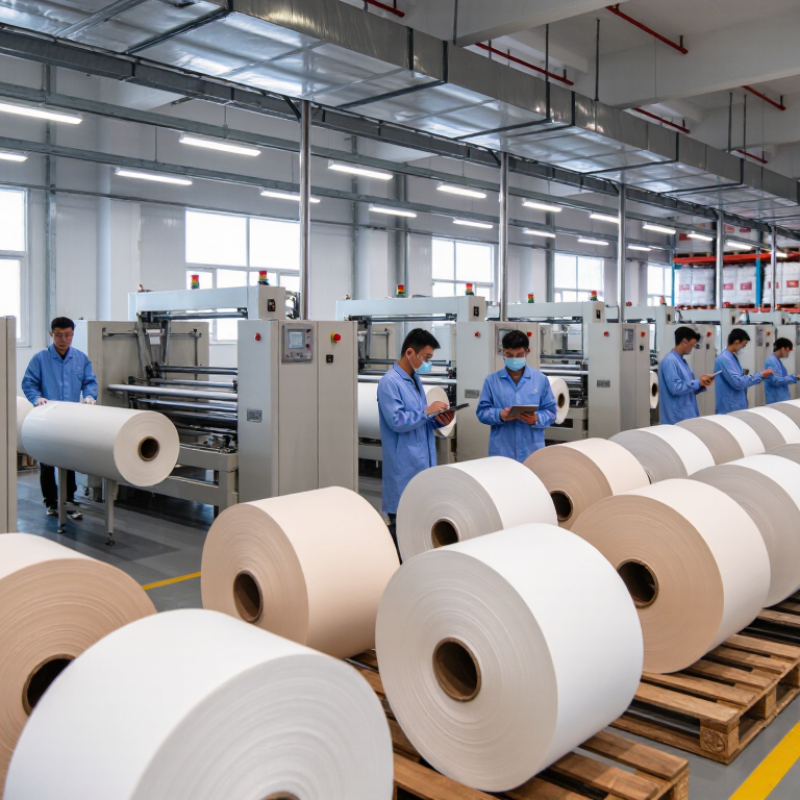
What Biodegradable Non Woven Fabric Means and Why It Matters
Biodegradable non woven fabric is designed to break down through biological activity, not simply disappear. Its fibers may include cellulose, starch blends, PLA, or other bio-based materials. Yet “bio-based” and “biodegradable” are different claims. One describes origin; the other describes end-of-life behavior.
The OECD’s Global Plastics Outlook reported 353 million tonnes of plastic waste in 2019, with only 9% recycled. This pressure explains growing interest in lower-impact non woven materials. The European Bioplastics market data estimated global bioplastics production at about 2.18 million tonnes in 2023, rising toward 3.42 million tonnes by 2028. Packaging remains the largest application. However, these figures cover bioplastics broadly, not every fabric grade.
Real performance depends on heat, moisture, microbes, thickness, and additives. A compostable sheet may require an industrial composting facility. It may not break down quickly in soil, seawater, or a household compost bin. Standards such as EN 13432 and ASTM D6400 help assess compostability, but certification must match the intended disposal route. During material evaluation, I would check tear strength, liquid absorption, seam behavior, and decomposition evidence together. A fabric that breaks down quickly but fails during use is not a responsible solution. The data also leaves room for doubt. More independent testing is still needed for long-term soil effects, coatings, dyes, and blended structures.
| Rank | Supplier Category | Primary Biodegradable Feedstock | Typical Nonwoven Process | Common Basis Weight | Typical Width Range | Relevant Verification or Standard | Expected End-of-Life Route | Common Applications | Typical MOQ | Typical Lead Time |
|---|---|---|---|---|---|---|---|---|---|---|
| 1 | Industrial-compostable PLA nonwoven supplier | Polylactic acid derived from renewable plant sugars | Spunbond, meltblown, or spunlace blends | 15–150 g/m² | 1.6–3.2 m | EN 13432 ASTM D6400 Product-level compostability testing required | Industrial composting under controlled heat, moisture, and microbial conditions | Packaging layers, hygiene components, agricultural covers, filtration media | 500–2,000 kg | 15–30 days |
| 2 | Cellulose spunlace supplier | Wood-pulp cellulose or other responsibly sourced cellulose fiber | Hydroentangled spunlace | 30–100 g/m² | 1.6–3.2 m | FSC or PEFC fiber chain ISO 9073 testing | Biological degradation is generally possible; disposal performance depends on binders, finishes, dyes, and product construction | Wipes, cosmetic pads, medical drapes, absorbent products | 1,000–3,000 kg | 20–35 days |
| 3 | Regenerated cellulose nonwoven supplier | Viscose or other regenerated cellulose fibers | Spunlace, needlepunch, or airlaid | 25–120 g/m² | 1.6–3.3 m | ISO 9073 Biodegradation test required | Typically biodegradable in suitable biological environments when free from persistent synthetic components | Wet wipes, filtration, medical and personal-care materials | 1,000–5,000 kg | 20–35 days |
| 4 | Lyocell fiber nonwoven supplier | Cellulose pulp processed into regenerated lyocell fibers | Spunlace or airlaid | 30–150 g/m² | 1.6–3.2 m | Fiber traceability ISO 9073 | Usually biodegradable as a cellulosic fiber; finished-product testing is needed for coatings and binders | Premium wipes, facial masks, absorbent pads, hygiene products | 1,000–3,000 kg | 25–40 days |
| 5 | Bamboo-derived cellulose nonwoven supplier | Bamboo converted into regenerated cellulose fiber | Spunlace or thermal-bonded nonwoven | 35–120 g/m² | 1.6–3.2 m | Fiber-content verification ISO 9073 | Cellulosic fiber can biodegrade; the full product depends on synthetic additives, laminates, and finishing chemistry | Wipes, disposable towels, hygiene materials, household cleaning products | 1,000–5,000 kg | 20–35 days |
| 6 | PHA-based biodegradable nonwoven supplier | Polyhydroxyalkanoate produced through microbial fermentation | Spunbond, meltblown, or composite nonwoven | 20–120 g/m² | 1.6–3.0 m | ASTM D5338 ISO 14855 Specific test environment must be stated | Potential biodegradation varies by polymer grade and environment; soil, compost, freshwater, and marine claims are not interchangeable | Specialty packaging, agricultural products, filtration, research-stage disposables | 500–2,000 kg | 30–60 days |
| 7 | Natural-fiber needlepunch supplier | Jute, hemp, cotton, flax, kenaf, or other plant fibers | Needlepunch or mechanical entanglement | 100–800 g/m² | 1.0–3.0 m | Fiber composition test ISO 9073 | Plant fibers are generally biodegradable, subject to contamination, finishes, and composite construction | Automotive interiors, furniture padding, geotextiles, insulation, erosion control | 2,000–10,000 kg | 20–45 days |
| 8 | Airlaid cellulose supplier | Fluffed cellulose pulp, often combined with absorbent natural fibers | Airlaid with mechanical or biodegradable bonding systems | 40–300 g/m² | 1.2–2.8 m | ISO 9073 Absorption testing | Suitable for biological degradation when the binder and other components are also compatible with the intended disposal route | Absorbent cores, food pads, medical underpads, household products | 1,000–5,000 kg | 25–45 days |
| 9 | Natural-fiber thermal-bonded supplier | Cotton, bamboo, wood pulp, or other natural fibers with a low-melt binder fiber | Thermal bonding or through-air bonding | 30–180 g/m² | 1.6–3.2 m | ISO 9073 Binder-content disclosure | Biodegradability depends strongly on the percentage and chemistry of the binder fiber | Hygiene products, filtration, packaging inserts, disposable pads | 1,000–5,000 kg | 20–40 days |
| 10 | Biodegradable composite nonwoven supplier | Combination of cellulose, PLA, PHA, or natural fibers | Composite spunbond, spunlace, needle-punch, or laminated construction | 40–250 g/m² | 1.6–3.2 m | EN 13432 ASTM D6400 Product-specific testing | Performance is governed by the least biodegradable layer, adhesive, coating, ink, or finish in the construction | Compostable packaging, agricultural covers, medical products, specialty filtration | 1,000–5,000 kg | 30–60 days |
Ontario launching new 12-year rebate program